
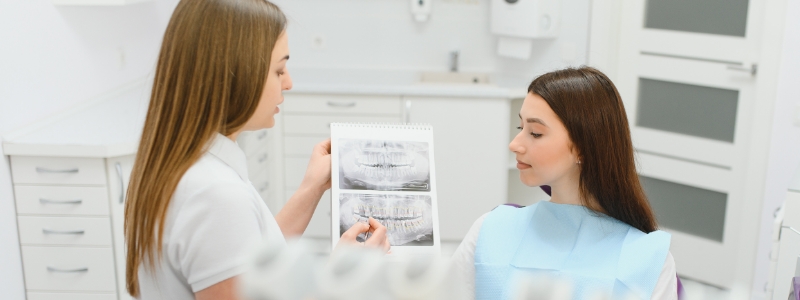
An anterior open bite is a condition where the upper and lower front teeth don’t meet when the mouth is closed, leaving a gap. This can affect chewing, speech, and the appearance of your smile. It can also lead to other complications, like jaw pain and impaired tongue posture.
What causes an anterior open bite?
An anterior open bite can result from several factors, including:
- Skeletal issues: Discrepancies in how the upper and lower jaws grow, also called skeletal open bite
- Habitual behaviors: Prolonged thumb sucking, pacifier use, or mouth breathing can interfere with teeth alignment
- Tongue posture: Improper tongue placement during swallowing or at rest can push teeth out of alignment
- Genetics: Family history of malocclusion, including open bites, increases the likelihood of developing this condition
What are the symptoms associated with an anterior open bite?
Common symptoms include:
- A visible gap between the upper and lower front teeth when the mouth is closed
- Difficulty biting or chewing food effectively
- Speech issues, such as a lisp or difficulty enunciating certain sounds
- Strain or discomfort in the jaw and teeth
- Jaw pain or tension due to misalignment
These symptoms can affect both dental health and overall well-being, emphasizing the need for timely intervention.
How is it diagnosed?
A thorough evaluation by a dentist is essential to diagnose an anterior open bite.
Diagnostic methods may include:
- Physical examination: Assessing how the teeth come together when the mouth is closed
- Imaging techniques: X-rays or 3D scans to visualize jaw alignment and identify the extent of the condition
- Patient history review: Identifying contributing factors, such as habits or genetic predispositions
A precise diagnosis is critical for developing a tailored treatment plan.
What treatment options are available for correcting an anterior open bite?
Treatment varies depending on the cause and severity of the condition.
Options include:
- Orthodontic treatments: Braces or aligners to reposition teeth and improve alignment.
- Behavioral interventions: Addressing habits like thumb sucking or improper tongue posture to prevent further misalignment.
- Surgical procedures: For severe cases, jaw surgery may be necessary to correct the alignment of the upper and lower jaws.
- Aligners: A discreet, removable option effective for mild to moderate cases.
Can an anterior open bite cause temporomandibular joint (TMJ) disorders?
An anterior open bite can contribute to temporomandibular joint (TMJ) disorders.
Misaligned teeth and jaws place additional strain on the TMJ, causing symptoms like:
- Jaw clicking
- Jaw popping
- Jaw pain or discomfort
- Difficulty opening or closing the mouth fully
Correcting the open bite can reduce these symptoms and relieve TMJ strain.
Is it possible for an anterior open bite to close naturally over time?
In some cases, if the open bite is caused by habits like thumb sucking and those habits stop, the bite may partially close. However, most cases require professional treatment to fully correct the alignment and ensure long-term results.
Can aligners fix an anterior open bite?
Aligners are an effective and popular choice for treating mild to moderate open bites.
Aligners work by gradually shifting teeth into their correct positions and offer several benefits:
- Discreet appearance
- Removability for easier eating and cleaning
- Precise adjustments for optimal alignment
What are the potential complications if an anterior open bite is left untreated?
Leaving an anterior open bite untreated can lead to complications such as:
- Difficulty chewing and increased wear on back teeth
- Persistent speech problems
- Dental issues like cavities and gum disease due to misaligned teeth
- TMJ disorders and chronic jaw pain
Early intervention prevents these complications, ensuring better overall health.
How long does treatment for an anterior open bite typically take?
Treatment duration depends on the severity of the condition and the chosen method.
Typical timelines include:
- Aligners or braces: 12–24 months on average
- Surgical procedures: Recovery and post-surgical orthodontic care can take over a year
- Behavioral interventions: Timeframes vary based on the patient’s commitment and habits, typically taking weeks to months
What is the prognosis after treatment?
The outlook for an anterior open bite is excellent with appropriate treatment.
Patients often experience:
- Improved ability to chew and speak
- Relief from TMJ-related symptoms
- Increased confidence with a properly aligned smile
- Long-term improvements in dental health and overall quality of life
Comprehensive Dental Care with AZ Family Dental
At AZ Family Dental, we are committed to helping patients overcome dental challenges like anterior open bite. We use the latest dental techniques and technology to ensure effective and lasting care.
Contact us today to schedule a consultation!