
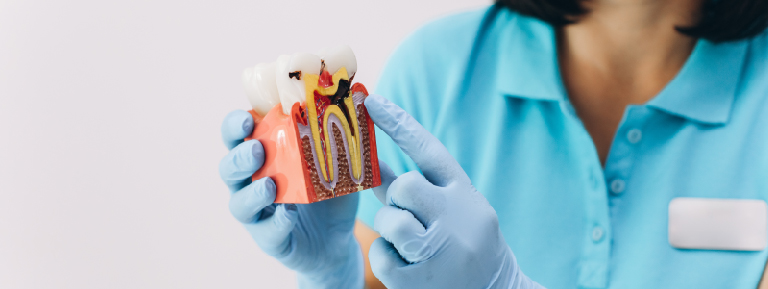
Maintaining healthy tooth roots is very important for overall dental health. Some may experience a condition called root resorption, which weakens teeth’ root structure. This article will inform you about root resorption, its causes, and how it may be treated and prevented.
What is root resorption?
It occurs when the body mistakenly starts breaking down the tooth structures, including the tooth roots. This is natural for children when adult teeth replace baby teeth. But when resorption occurs in permanent teeth, it requires a serious look by your dentist.
The two types are internal and external. Internal root resorption begins inside the tooth, while external root resorption starts on the outside surface of the tooth, eventually working its way inward.
What causes root resorption?
Many factors can contribute to root resorption in adult teeth.
The most common include:
- Trauma or injury to the tooth
- Orthodontic treatments that apply too much pressure to the root structures
- Infection or inflammation in the teeth and gums
- Repeated dental procedures, such as root canal treatments
- Teeth grinding or clenching
An easy way to approach the causes is that external root resorption is likely linked to trauma. On the other hand, internal resorption is likely a result of an infection inside the tooth.
How is it diagnosed?
Your best bet in combating this condition is early detection. In a regular dental visit, you will undergo X-rays of the teeth, which may reveal any dark spots or changes in the root structures. This may indicate that resorption is occurring.
If your dentist believes resorption is detected, he will develop a treatment plan to address the concern and protect the affected tooth.
What are the symptoms of root resorption?
It may go unnoticed in its early stages.
When the condition progresses, however, you may experience:
- Pain or discomfort
- Swelling in the gums
- Loosening of the tooth
- Dark spots on the tooth
Be quick to schedule an appointment with your dental professional if you notice any of these symptoms.
How can it be treated?
The treatment options typically depend on the extent of the damage. If the resorption is detected early, a root canal treatment is one option. Removing the damaged tissue will remove any threat to the root structures.
When tooth structures are too damaged, a tooth extraction might be necessary. Your dentist may suggest dental implants or other restorations to replace the missing tooth.
Is root resorption painful?
As stated above, root resorption may go unnoticed early on because it does not begin as a painful process. Only when the tooth roots begin to weaken do you begin to feel discomfort or sensitivity. This will be noticed especially when chewing or applying pressure to the tooth.
Can root resorption be prevented?
Unfortunately, root resorption may not always be prevented, but it is possible to reduce your risk. If you follow the prevention tips listed before, it may also help protect your permanent teeth from damage.
Prevention tips are:
- Visiting your dentist for regular dental check-ups and cleanings
- Avoid excessive pressure on your teeth
- Do not grind your teeth
- Practice good oral hygiene to prevent infection and inflammation from further damaging the affected area
- Address trauma or injuries to your teeth as soon as possible
How long does it take for it to develop?
Development depends on its cause and your overall dental health. No matter how long it takes to progress, once it begins, it can cause significant damage to the root structures if left untreated. Maintaining regular dental appointments will help prevent severe complications if root resorption occurs.
What are the complications of root resorption?
If untreated, it can lead to:
- Loss of affected tooth
- Damage to surrounding teeth
- Damage to the jaw bone
- Increased risk of infection in the gums and teeth
- Necessitate invasive dental procedures like tooth extractions
How does it affect dental health?
Root resorption has significant impacts on dental health overall. If tooth roots are damaged, it may ultimately lead to tooth loss and other issues. Dental health becomes more vulnerable to infections and decay when tooth structures weaken. This is why you must prioritize keeping a regular visit to your dentist.
Get the Best in Dental Care with AZ Family Dental
From preventative care to emergency dental procedures and cosmetics, we offer the best the industry has to offer in oral hygiene, diagnostics, and treatments.
Our full spectrum of dental services include:
- General Care
- Preventative Care
- Cosmetic Services
- Removals
- Periodontal Care
- Orthodontics
- Tooth Replacement
- Prosthodontist Care
Schedule an appointment for you and your family today to get started!